
Heat Pump vs. Furnace in North Florida
As winter approaches in North Florida and South Georgia, homeowners may wonder whether their heat pump provides enough warmth or a furnace would be a better option. Both systems can keep a home comfortable, but the right choice depends on local temperatures, energy costs and existing equipment. A side-by-side look at a heat pump vs. furnace, including how each system heats, what it costs to run and what maintenance it needs, can help homeowners weigh their options.
How Each System Heats Your Home
Heat Pumps
A heat pump transfers heat from the outdoor air into the home using refrigerant rather than generating heat directly. The process reverses during summer, allowing the same system to provide both heating and cooling.
Gas Furnaces
Gas furnaces burn natural gas or propane to generate heat, which is distributed through the home’s ductwork. Unlike heat pumps, gas furnaces require a separate air conditioning system for cooling and typically deliver warmer air through the vents.
Electric Furnaces and Heat Strips
Electric furnaces use electrical resistance to generate heat, often through heating elements called heat strips. In many Florida homes, heat strips are installed in an air handler to provide primary heating alongside a conventional air conditioner, or supplemental heating for a heat pump during colder weather. Electric resistance heating uses more electricity than a heat pump in its normal heating mode. According to a 2023 U.S. Department of Energy report, modern heat pumps can reduce electricity use by 50% compared to electric furnaces and baseboard heaters. Knowing how your heat pump uses heat strips is one of the simplest ways to keep winter heating costs in check.
Dual-Fuel Systems
A dual-fuel system combines a heat pump with a gas furnace. The heat pump handles heating during milder weather, while the furnace takes over when temperatures drop below a designated point.
Do You Need a Furnace in North Florida, or Is Your Heat Pump Enough?
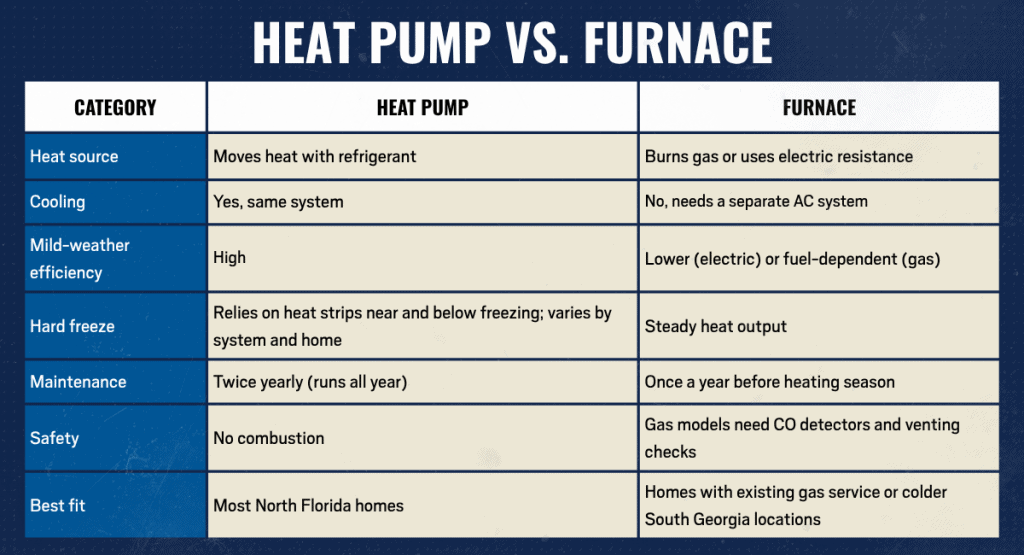
For most North Florida homeowners, a properly sized and maintained heat pump provides enough heat because the region’s winters stay mild. According to the National Weather Service, Tallahassee’s January highs average 64 degrees, with lows around 40 degrees from 1991 to 2020. Those temperatures allow heat pumps to operate efficiently for much of the heating season.
As temperatures drop near and below freezing, many heat pumps begin relying more heavily on supplemental heat strips, depending on the system and the home’s heating needs. However, a furnace may still make sense for homes with existing natural gas service or in colder parts of South Georgia.
What Each System Costs to Run and Replace
Heating Costs During a North Florida Winter
Heat pumps are generally economical to operate during North Florida’s mild winters because they transfer heat rather than generate it. When temperatures drop and supplemental heat strips activate, electricity consumption increases. Gas furnace operating costs depend on fuel prices and equipment efficiency. Heat pumps use Heating Seasonal Performance Factor (HSPF2) ratings to measure heating efficiency and Seasonal Energy Efficiency Ratio (SEER2) ratings for cooling, while gas furnaces use Annual Fuel Utilization Efficiency (AFUE) ratings to measure how much fuel becomes usable heat. Because these ratings measure different factors, an accurate operating-cost comparison depends on local utility rates.
Heat Pump vs. Furnace Replacement Costs
Replacement costs depend on equipment type, home size, efficiency and installation requirements. Here’s what to expect for each system:
- Heat pumps: In 2026, a heat pump installation in Florida averages about $10,300, which is lower than the national average.
- Gas furnaces and air conditioners: Carrier’s 2026 estimates put a gas furnace replacement at $3,800 to $12,000 and a central air conditioner at $3,000 to $15,000, before any gas line or venting work.
- Dual-fuel systems: Because this setup pairs a heat pump with a backup gas furnace, installation costs include both units plus any ductwork changes.
For homeowners replacing both an aging furnace and air conditioner, a heat pump vs. furnace cost comparison should weigh two new systems against a single heat pump. Federal tax credits for heat pumps ended after 2025 but utility rebates may still help offset the cost. A professional assessment can provide a more accurate estimate based on the home’s needs.
How to Maintain and Service a Heat Pump
Because heat pumps provide both heating and cooling, regular maintenance is important for year-round performance.
What Homeowners Can Do
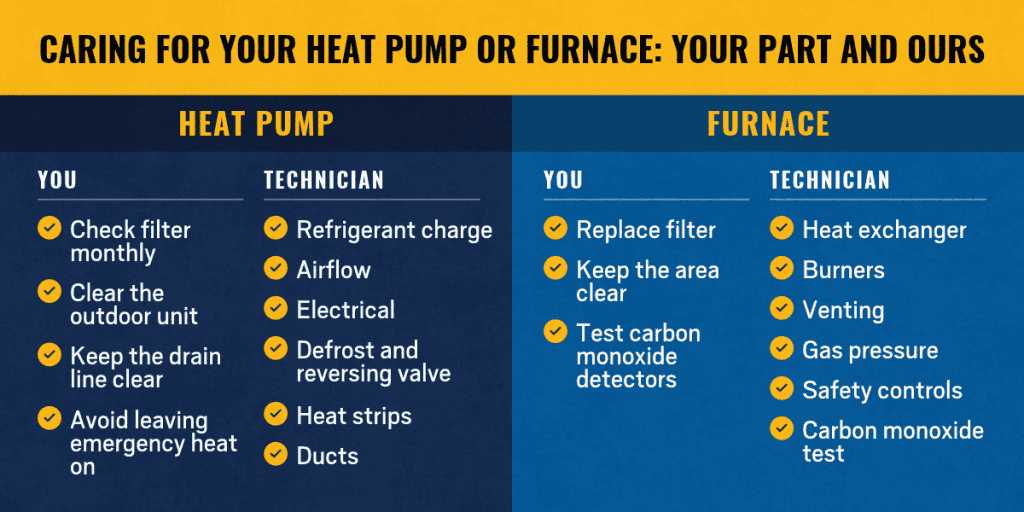
- Check air filters monthly. Replace them according to the manufacturer’s recommendations.
- Keep the outdoor unit clear. Remove leaves, mulch and vegetation, and gently rinse dirty outdoor coils when needed.
- Monitor the condensate drain line. Watch for clogs that could cause water damage or interrupt cooling.
- Check thermostat settings. Make sure emergency heat isn’t left on after a cold snap.
- Watch for performance changes. Schedule service if the system struggles to heat the home, runs constantly in mild weather or develops excessive ice that doesn’t clear during defrost cycles.
What Professional Heat Pump Service Includes
Heat pumps should receive professional maintenance twice a year: in spring before cooling season and in fall before heating season. During an inspection, a technician checks refrigerant charge, airflow, electrical connections, ductwork, defrost operation, the reversing valve and supplemental heat strips.
How to Maintain and Service a Furnace
Furnaces also require routine maintenance, particularly gas systems that involve fuel combustion and venting.
What Homeowners Can Do
- Replace air filters regularly. Check them monthly and follow the manufacturer’s replacement schedule.
- Keep the area clear. Avoid storing items against or around the furnace.
- Test carbon monoxide detectors. Homes with gas furnaces should have working detectors.
- Recognize warning signs. Frequent cycling, unusual burning odors or soot around a gas furnace can indicate a problem requiring professional service.
- Leave gas components to professionals. Never attempt to repair burners, gas lines or other fuel-burning components yourself.
If a carbon monoxide alarm sounds, leave the home immediately and call 911 from a safe location.
What Professional Furnace Service Includes
Gas furnaces should receive an annual inspection before the heating season. A technician checks the heat exchanger, burners, venting, gas pressure, safety controls, carbon monoxide levels and blower operation. Electric furnaces and heat strips also require inspections of heating elements, electrical connections, sequencers and limit switches.
Frequently Asked Questions
Are heat strips the same as a furnace?
Not exactly. Heat strips use electric resistance to generate warmth, much like an electric furnace, but are typically installed inside an air handler to provide primary or supplemental heating.
What is the difference between emergency heat and auxiliary heat?
Auxiliary heat activates automatically when a heat pump needs additional heating capacity, while emergency heat generally bypasses the heat pump and relies on backup heating.
How often should a heat pump be serviced in Florida?
Twice a year, in spring and fall. In Florida, a heat pump runs nearly year-round for cooling and heating, so two visits help catch wear before each peak season.
Does a gas furnace need an inspection every year?
Yes. Annual inspections help identify potential safety concerns involving the heat exchanger, burners, venting and gas connections.
Can I replace my gas furnace with a heat pump?
Yes. A heat pump can replace a gas furnace and provide air conditioning in one system. The decision depends on the home’s heating requirements, existing equipment and installation costs. Reviewing the signs that it’s time for an AC replacement can help homeowners decide when to make the switch.
Find the Right Heating System With Barineau
For a new heating system or routine maintenance on your current one, Barineau Heating and Air Conditioning can help you choose the right option and keep your home comfortable throughout the year.
The Barineau family has served North Florida and South Georgia for more than 50 years across three generations. From seasonal tune-ups to complete system replacements, Barineau’s technicians can recommend solutions for all your home’s heating needs. For ongoing care, the Total Comfort Service Program offers annual or twice-yearly maintenance visits with a 28-point inspection, plus priority service and repair discounts. Call (850) 580-4029 or schedule an appointment today.