
6 AC Unit Noises and What They Mean
Heating and cooling systems are naturally among the noisiest appliances in a home, and many sounds during normal operation are expected. A brief click when the system starts, the steady hum of the condenser or an occasional pressure release are all common parts of the cooling cycle. However, unfamiliar or persistent noises from your outdoor unit should never be ignored.
Certain sounds can provide early warning signs of developing mechanical, electrical or refrigerant issues. In many cases, addressing a problem when it first appears can help prevent more extensive repairs and unexpected system failures. Understanding which sounds are normal and which may indicate trouble can help homeowners make informed decisions and know when it’s time to call an HVAC professional.
Six Common AC Unit Noises and What They Mean
Florida’s extended cooling season places significant demands on outdoor air conditioning equipment, causing components to wear over time. In many cases, unusual sounds are among the first signs that something within the system needs attention. Identifying those sounds early can help homeowners address minor issues before they lead to more extensive repairs or unexpected breakdowns.
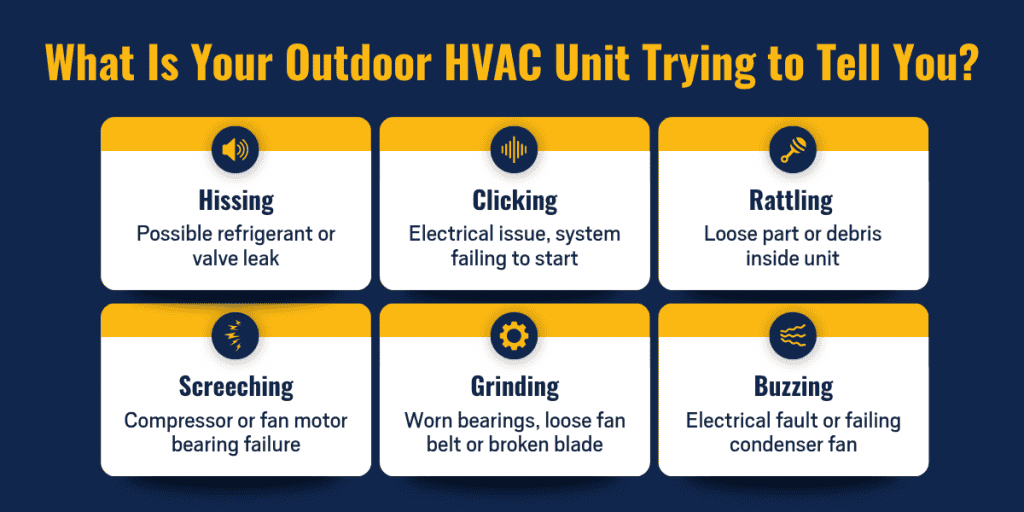
Below are some of the most common noises homeowners hear from outdoor AC units, along with what they may indicate and when professional service is recommended.
1. Hissing
Brief hissing sounds during normal operation can occur as refrigerant pressure equalizes, but constant hissing may indicate a refrigerant line leak, a leaking compressor valve or another internal issue. Because refrigerant problems can affect cooling performance and place additional strain on the system, persistent hissing should always be evaluated by a licensed HVAC technician.
2. Clicking
A click when the system starts or stops is normal, but repeated or rapid clicking often signals an electrical problem involving the relay switch, capacitor, control board or compressor. Much like a car with a weak battery, the system may be trying to start but lacks the power needed to do so. If the unit repeatedly clicks without starting, schedule service promptly to prevent further damage.
3. Rattling
Rattling sounds are often caused by loose screws, worn components or debris inside the unit. In Florida, high winds and thunderstorms can also leave sticks, leaves and other debris inside outdoor units. Left unchecked, these loose parts can damage surrounding components, so it’s best to turn the system off and have it inspected before the problem worsens.
4. Screeching
High-pitched screeching or squealing sounds often point to a failing fan motor or compressor issue. Because worn bearings can overheat and cause additional damage, the system should be shut off and inspected by an HVAC professional as soon as possible.
5. Grinding
Grinding noises typically indicate worn bearings, a broken fan blade or internal compressor wear. When components begin grinding against each other, damage can spread quickly to other parts of the system, creating a domino effect that leads to more extensive repairs, making prompt service critical.
6. Buzzing
Persistent buzzing may signal an electrical issue, a refrigerant leak or a failing condenser fan. Buzzing from a unit that struggles to cool or won’t start should always be evaluated by a licensed technician.
When Should You Call an HVAC Professional?
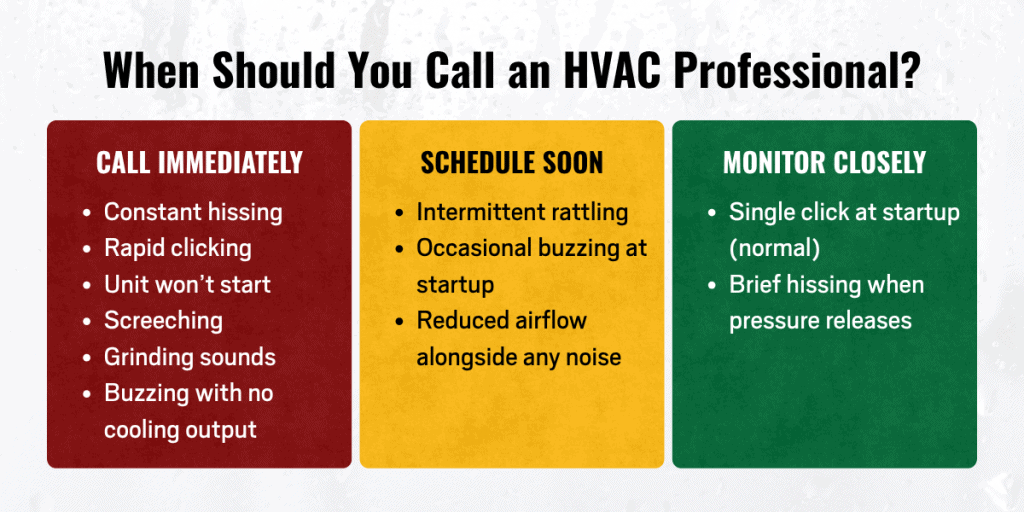
Some HVAC sounds can be monitored, while others require immediate attention. Constant hissing, rapid clicking, screeching, grinding and loud buzzing accompanied by reduced cooling performance should never be ignored. These sounds often indicate refrigerant leaks, electrical issues or failing components that can lead to more extensive damage if left unaddressed.
By contrast, a brief click when the system starts or occasional pressure-release noises are typically part of normal operation. Anytime a new sound is accompanied by poor airflow, inconsistent temperatures or a system that struggles to start, it’s best to schedule an inspection. Identifying problems early can often help prevent unexpected breakdowns and more costly repairs.
Prevent Strange HVAC Noises with Routine Maintenance
Routine maintenance can help reduce the likelihood of noise-related failures by identifying loose components, worn bearings and debris before they cause more serious problems. Many unusual sounds begin as minor issues that can be corrected early, helping homeowners avoid unexpected breakdowns and more extensive repairs.
Annual tune-ups also allow technicians to evaluate electrical connections, moving parts and overall system performance. With Florida’s long cooling season placing additional demands on HVAC equipment, regular maintenance plays an important role in keeping systems operating efficiently and quietly throughout the year.
Frequently Asked Questions
What does it mean when my outdoor AC unit is hissing?
A brief hissing sound may occur during normal operation, but constant hissing can indicate a refrigerant leak or compressor issue. Because Florida homeowners rely heavily on their air conditioning systems for much of the year, refrigerant problems should be addressed promptly to avoid reduced cooling performance and higher energy costs.
Why does my AC click repeatedly but not turn on?
Repeated clicking often indicates an electrical problem involving the capacitor, relay switch or control board. In many cases, these repairs are less expensive when addressed early. Continuing to force the system to start can lead to compressor damage, which is typically much more costly.
Can storms and yard debris cause strange noises in my outdoor AC unit?
Yes. Florida’s thunderstorms, high winds and falling debris can introduce sticks, leaves and other objects into outdoor units, leading to rattling or clanking sounds. Keeping vegetation trimmed and scheduling regular maintenance can help prevent unnecessary wear and damage to the unit.
What causes a screeching or squealing sound from an AC unit?
Screeching or squealing often points to worn bearings or a failing fan motor. These parts can overheat if the system continues running, potentially leading to more extensive repairs. If you hear these sounds, it’s best to shut the unit off and schedule service.
When should I call an HVAC professional about a strange noise?
Any new sound accompanied by poor airflow, warm air or difficulty starting the system warrants professional attention. Constant hissing, rapid clicking, grinding and loud buzzing should be evaluated immediately, while a brief click at startup or occasional pressure-release noise is generally considered normal.
Trust the Experts
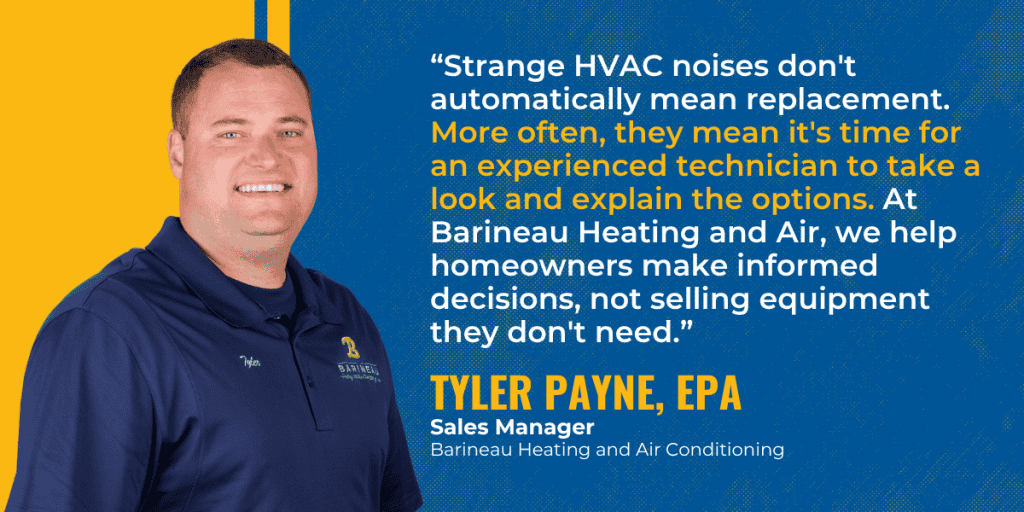
Barineau Heating and Air Conditioning is a proud, award-winning Carrier-authorized dealer, continuing a legacy of comfort that began more than a century ago. The professionals at Barineau have proudly served north Florida, south Georgia and the Emerald Coast for more than 50 years and across three generations, providing top-quality home comfort service. Through committed hard work, integrity, ingenuity and treating customers like family, Barineau has built a reputation as the premier HVAC service company in the area.
With Barineau Heating and Air Conditioning’s Total Comfort Service Program, you’ll enjoy cost-saving benefits like no overtime charges and repair discounts. Signing up for an annual plan removes the burden of having to remember annual maintenance appointments, and you will receive priority service whenever you need us. You can rest easily knowing that Barineau will keep your system running smoothly and remind you when it’s time for your appointment.
Have questions? Call our team at (448) 241-9495 or schedule an appointment.