
AC Freezing Up? Here’s What Causes It and How to Fix It
It may seem unusual for an air conditioner to freeze in North Florida and South Georgia’s warm, humid climate, but ice can develop when restricted airflow, low refrigerant or another problem causes the evaporator coil to become too cold. Homeowners may notice ice on the indoor coil or air handler, along the refrigerant lines connecting the indoor and outdoor equipment or near the outdoor unit, often accompanied by weak airflow or warm air from the vents. Continuing to run a frozen system can place added strain on the compressor and potentially lead to a more expensive repair, making it important to understand what caused the freezing, how to thaw the system safely and when to call an HVAC professional.
What Causes an AC to Freeze Up?
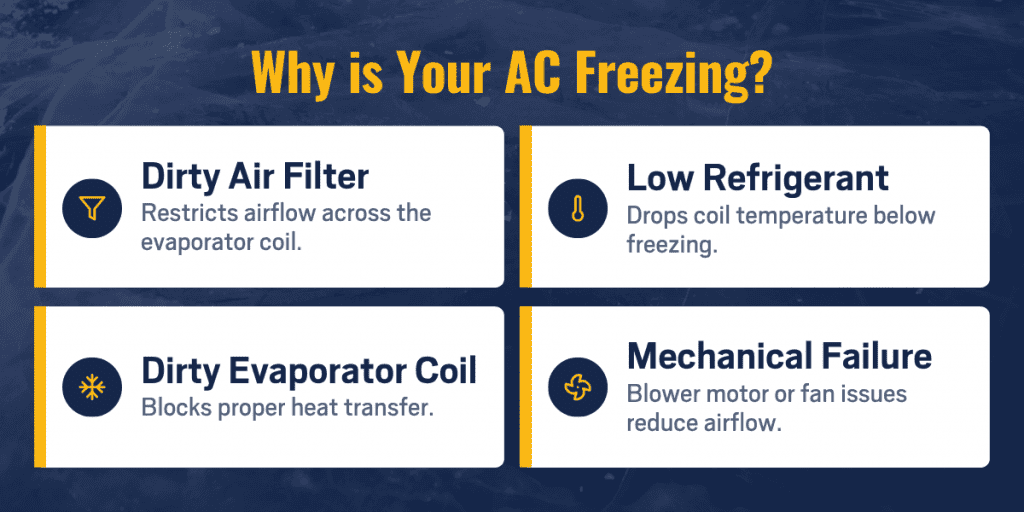
An air conditioner relies on warm indoor air moving across the evaporator coil. If airflow becomes restricted or refrigerant pressure drops too low, the coil can fall below freezing and turn the condensation on it into ice. Several common problems can cause this to happen:
Restricted airflow
A dirty air filter can prevent enough warm air from passing over the evaporator coil. Closed supply registers, blocked return vents or a failing blower motor can reduce airflow further, allowing the coil to become too cold.
Low refrigerant
A refrigerant leak can lower the pressure inside the system, causing the evaporator coil’s temperature to drop below freezing. Ice may begin on the coil and spread along the refrigerant lines. A licensed HVAC technician must locate the leak, complete the necessary repair and restore the proper refrigerant level.
Dirty evaporator coil
Dust and debris on the evaporator coil can restrict airflow and interfere with heat transfer. Because the coil is located inside the system and can be easily damaged, it generally requires professional cleaning.
Mechanical or thermostat issues
A failing blower fan, worn capacitor or stuck relay can prevent the system from moving enough air across the coil. A faulty thermostat or an unusually low setting may also cause the air conditioner to run for extended periods, increasing the risk of freezing.
Steps to Take When Your AC Is Frozen
Some basic steps can help a homeowner safely thaw a frozen air conditioner and address simple airflow problems. Refrigerant leaks, electrical issues and mechanical failures, however, should always be handled by a licensed HVAC technician.
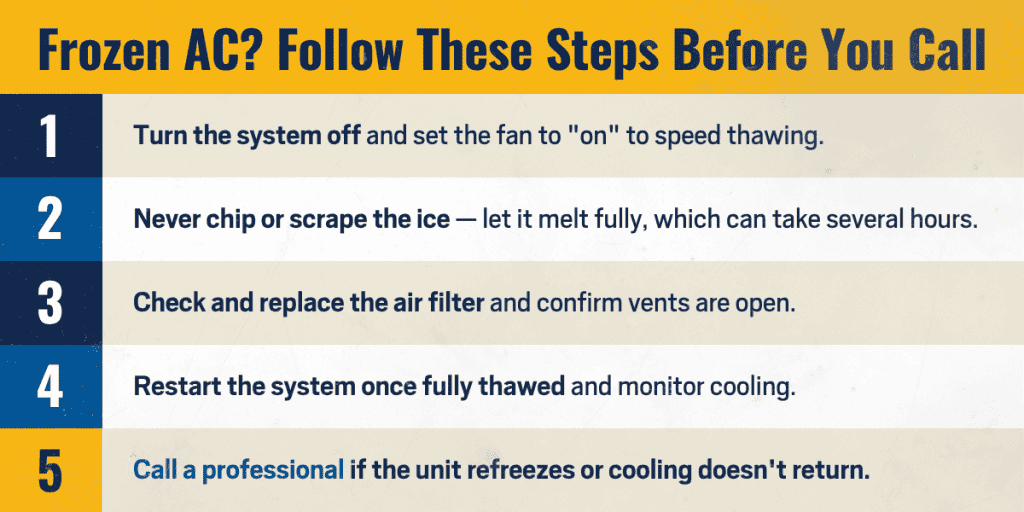
- Turn off the cooling system. Set the thermostat to “off” to stop the AC from running and prevent additional strain on the compressor.
- Switch the fan setting to “on.” Running the fan without cooling can circulate warmer air across the evaporator coil and help the ice melt. Thawing may take several hours.
- Let the ice melt naturally. Never chip, scrape or apply heat to the ice. These methods can damage the coil or refrigerant lines.
- Protect the area around the unit. Melting ice can produce a significant amount of water as it drains from the coil. Place towels or a shallow pan beneath the indoor unit and confirm the condensate drain line is clear to prevent overflow and water damage to floors or ceilings, especially if the air handler is located in an attic.
- Check the air filter and vents. Replace a dirty filter and confirm that supply registers and return vents are open and unobstructed.
- Restart and monitor the system. Once the ice has completely melted, turn the cooling system back on and check whether cool air and normal airflow return.
When to Call an HVAC Technician
If the AC freezes again, continues blowing warm air or has weak airflow after thawing, turn it off and schedule a professional inspection. A technician can test refrigerant levels, locate leaks, inspect the blower motor and electrical components, clean the evaporator coil and identify other problems that cannot be safely diagnosed or repaired by a homeowner.
How to Prevent Your AC From Freezing Again
Routine maintenance and proper airflow can reduce the likelihood of an AC freezing up again. Homeowners can take several steps to help the system operate efficiently.
- Replace the air filter regularly. Check the filter each month and replace it every one to three months, depending on the filter type, household conditions and system use. Homes with pets or heavy AC use may require more frequent replacement.
- Keep vents and registers open. Make sure furniture, rugs and other household items are not blocking supply registers or return vents. Closing multiple vents can disrupt airflow rather than reduce energy use.
- Avoid excessively low thermostat settings. Setting the thermostat significantly lower does not cool the home faster and may cause the system to run for extended periods.
- Limit AC use during unusually cool weather. Running the air conditioner when outdoor temperatures are low can contribute to freezing in systems not designed for low-temperature operation.
- Schedule annual HVAC maintenance. A professional can clean and inspect the evaporator coil, evaluate airflow, check refrigerant performance, and identify worn components before they cause the system to freeze.
Frequently Asked Questions
Why does my AC freeze up?
An AC typically freezes when the evaporator coil becomes too cold and the condensation on it turns to ice. Common causes include restricted airflow, low refrigerant, a dirty evaporator coil and malfunctioning mechanical or electrical components. Frost on an outdoor heat pump during the heating cycle is different and may require a separate diagnostic process.
What should I do when my AC is frozen?
Turn off the cooling system and set the thermostat fan to “on” to help the ice melt. Replace a dirty air filter, make sure vents are open and wait until the system has thawed completely before restarting it. Never chip or scrape away the ice.
What causes AC lines to freeze?
Frozen refrigerant lines often indicate that freezing has started at the evaporator coil and spread along the line. Restricted airflow and low refrigerant are two common causes, but a technician should inspect the system to determine the source.
Can I run my air conditioner while it is frozen?
No. Continuing to run a frozen air conditioner can place unnecessary strain on the system and potentially damage the compressor. Turn off the cooling function and allow the ice to melt completely.
How can I prevent my AC from freezing again?
Replace the air filter regularly, keep supply and return vents unobstructed and avoid setting the thermostat excessively low. Annual professional maintenance can also identify airflow, refrigerant or mechanical problems before they cause freezing.
When should I call an HVAC professional?
Call a professional if the system freezes again after thawing, does not resume cooling or continues to have weak airflow. You should also schedule service if you suspect a refrigerant leak, dirty evaporator coil or mechanical failure, since these problems require professional tools and expertise.
Trust the Experts
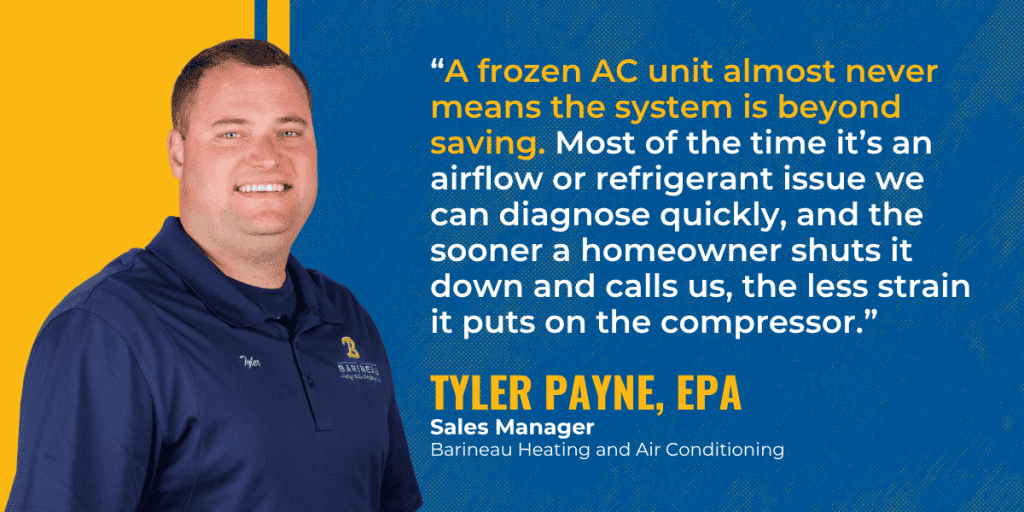
A frozen air conditioner does not necessarily mean the system needs to be replaced, but determining why it froze is important in preventing additional strain and repeat problems. For more than 50 years and across three generations, the Barineau family has served homeowners throughout North Florida, South Georgia and the Emerald Coast with a commitment to quality workmanship and customer care. Barineau’s Total Comfort Service Program includes a 28-point inspection designed to identify developing problems and help keep HVAC systems operating properly. Whether your AC is already freezing or you want to help prevent future problems, the Barineau Heating and Air Conditioning team is ready to help. Call (850) 580-4029 or schedule an appointment.